
Layered history. Lasting mystery.
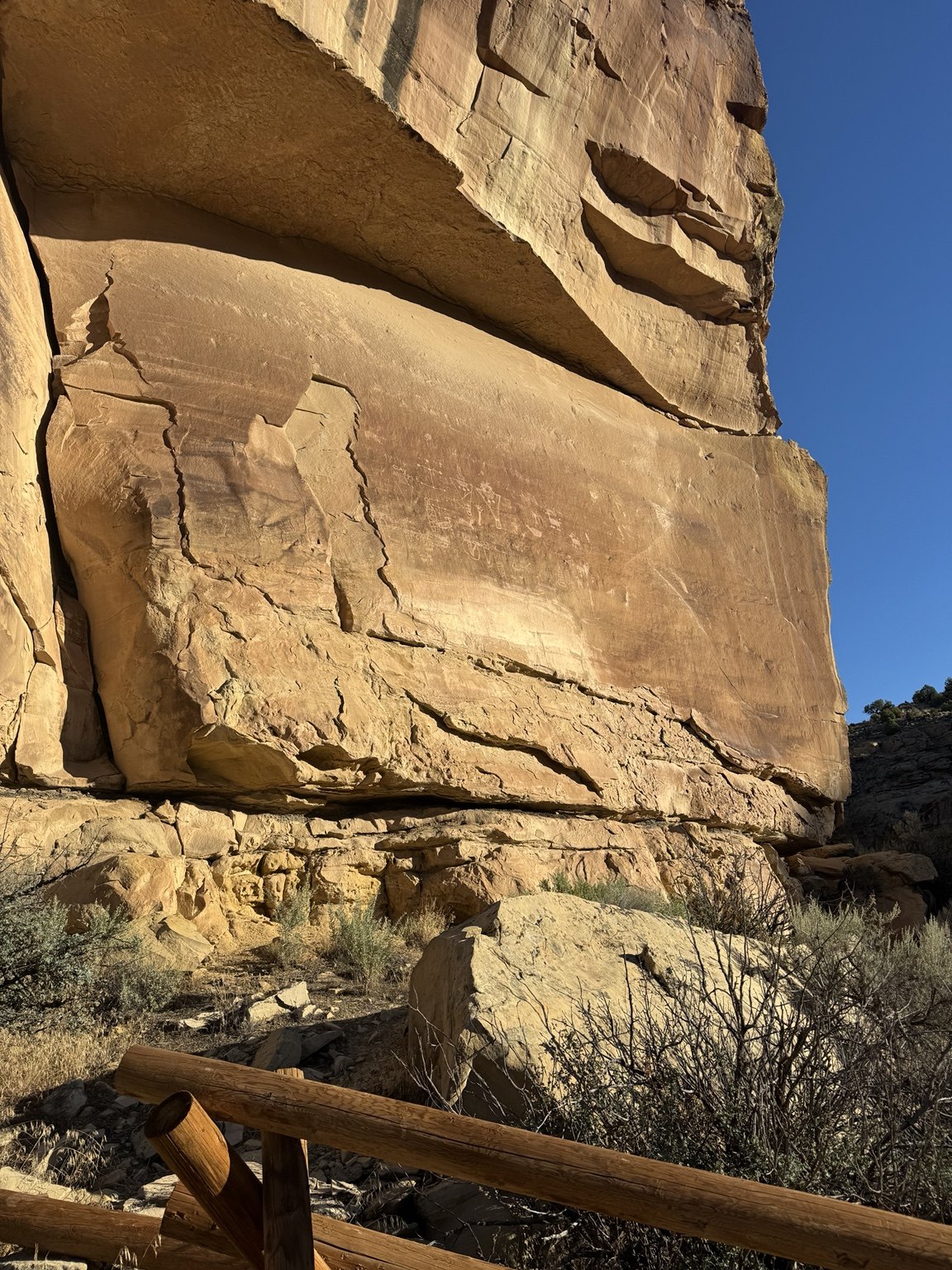
Sego Canyon presents an unusual concentration of rock imagery on sandstone walls in eastern Utah. The Bureau of Land Management identifies three culturally distinct styles at the site: Barrier Canyon, Fremont, and Ute. Seen together, the panels do not represent one moment or one people, but a layered visual record left across different periods.
Our purpose onsite was not to “prove” a Nephilim connection. It was to document what is actually present, identify the visual features that stand out, and then compare those observations with biblical and Second Temple traditions concerning giants, Watchers, and supernatural beings.
01 // The Site
Sego Canyon's importance begins with the fact that several artistic traditions occupy the same landscape. Painted pictographs and pecked petroglyphs appear across nearby surfaces. The BLM specifically recognizes Barrier Canyon, Fremont, and Ute styles here, making the site valuable precisely because its imagery is culturally layered rather than uniform.
02 // The Anthropomorphic Forms
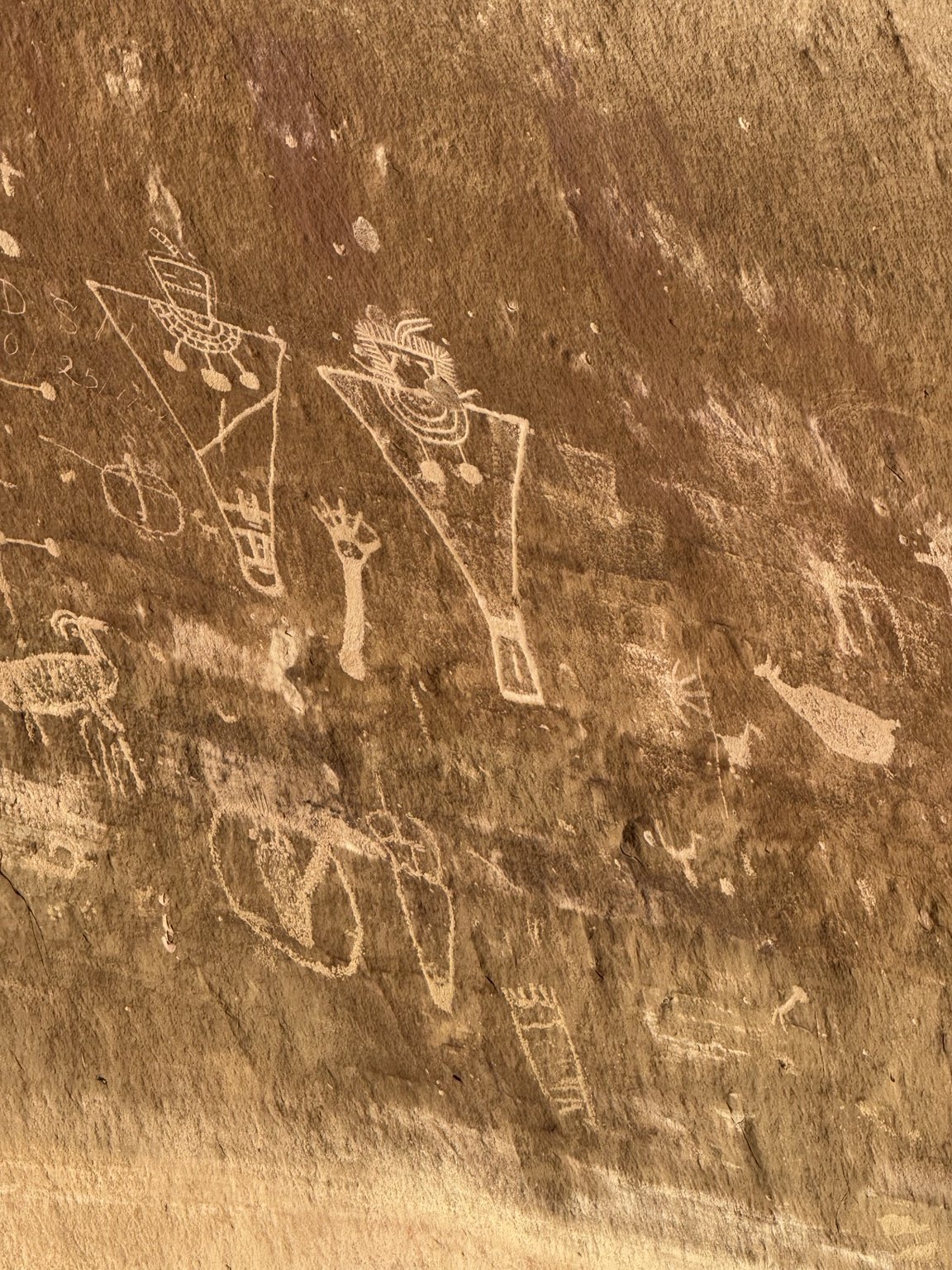
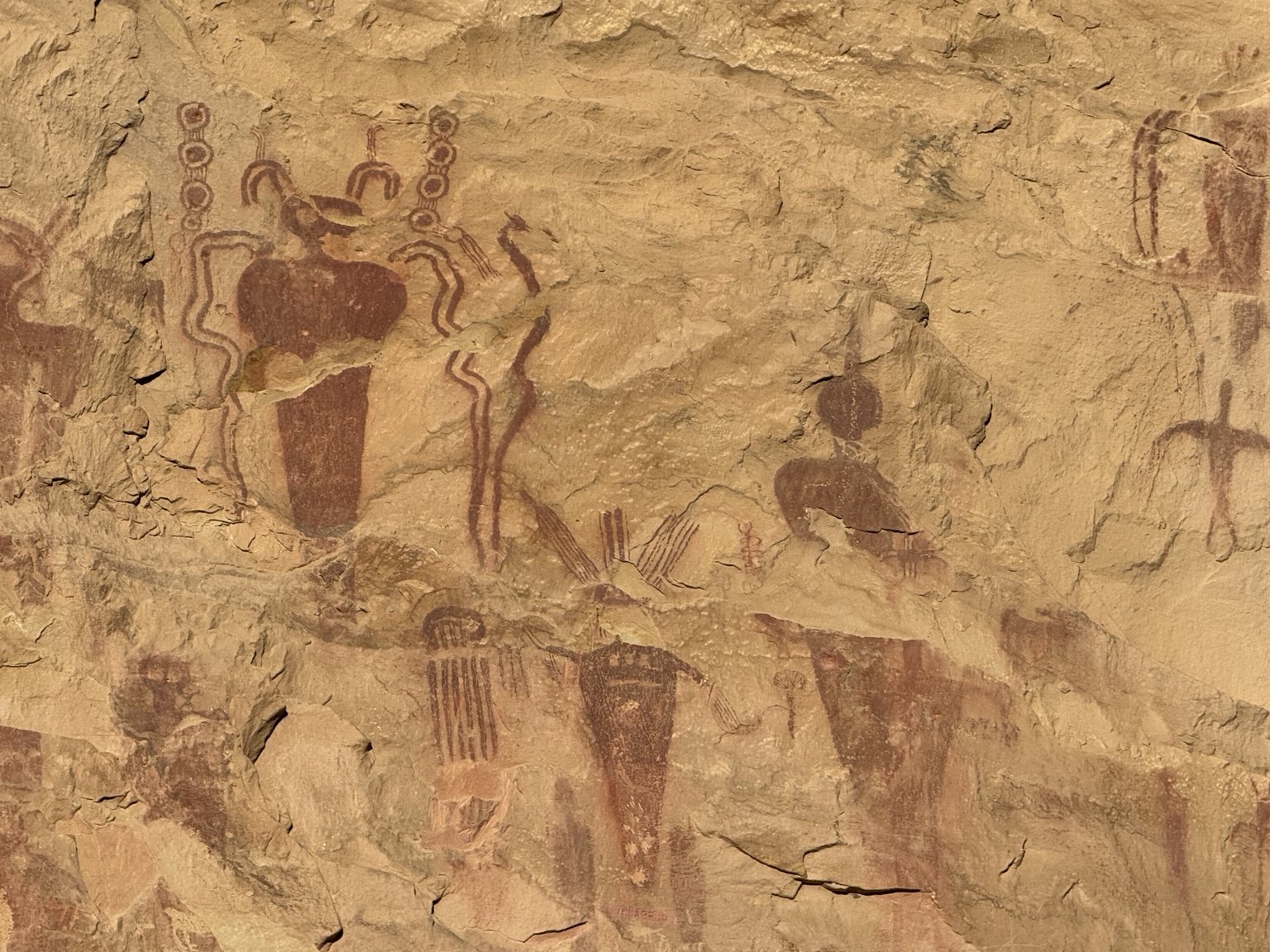
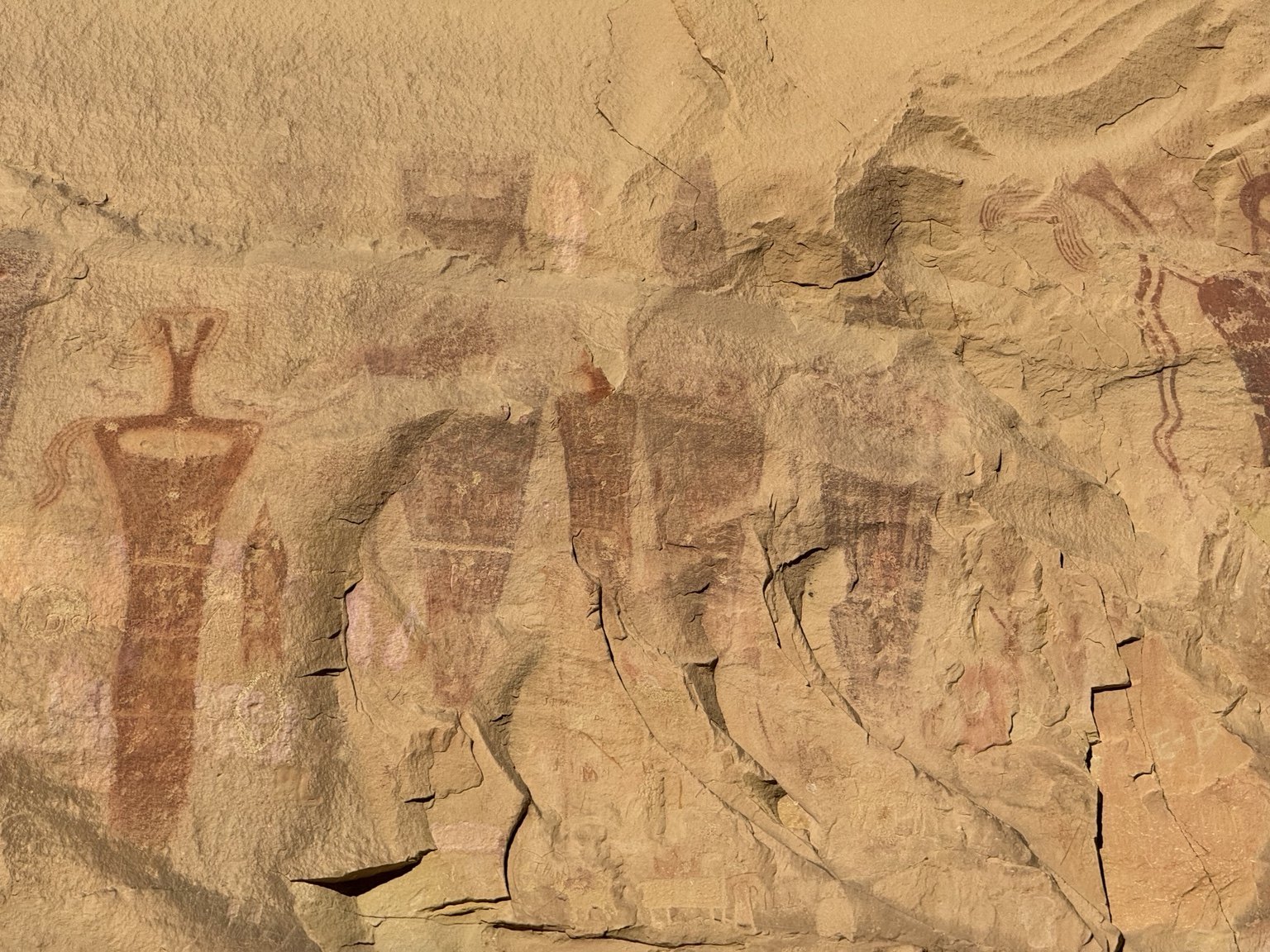
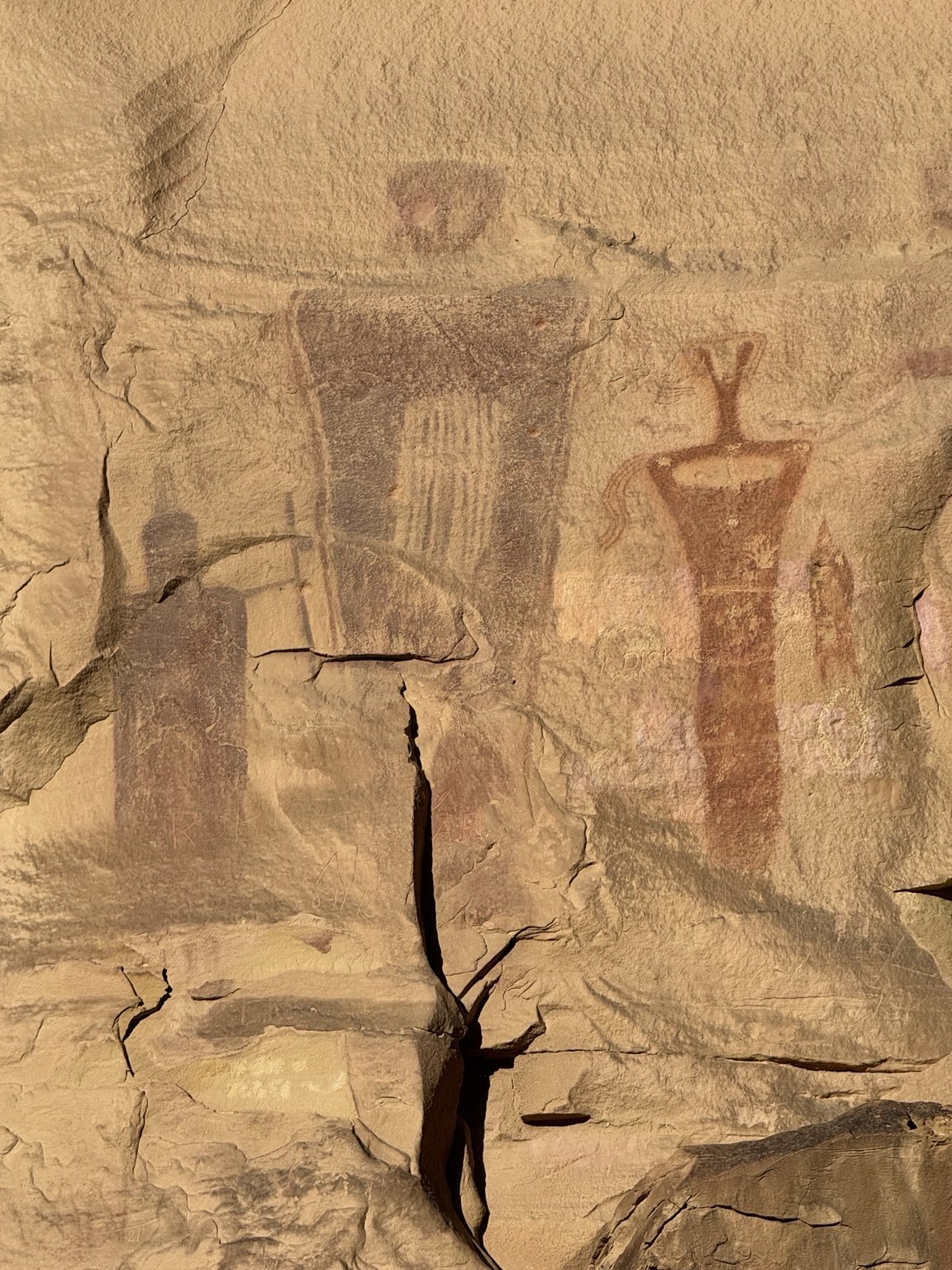
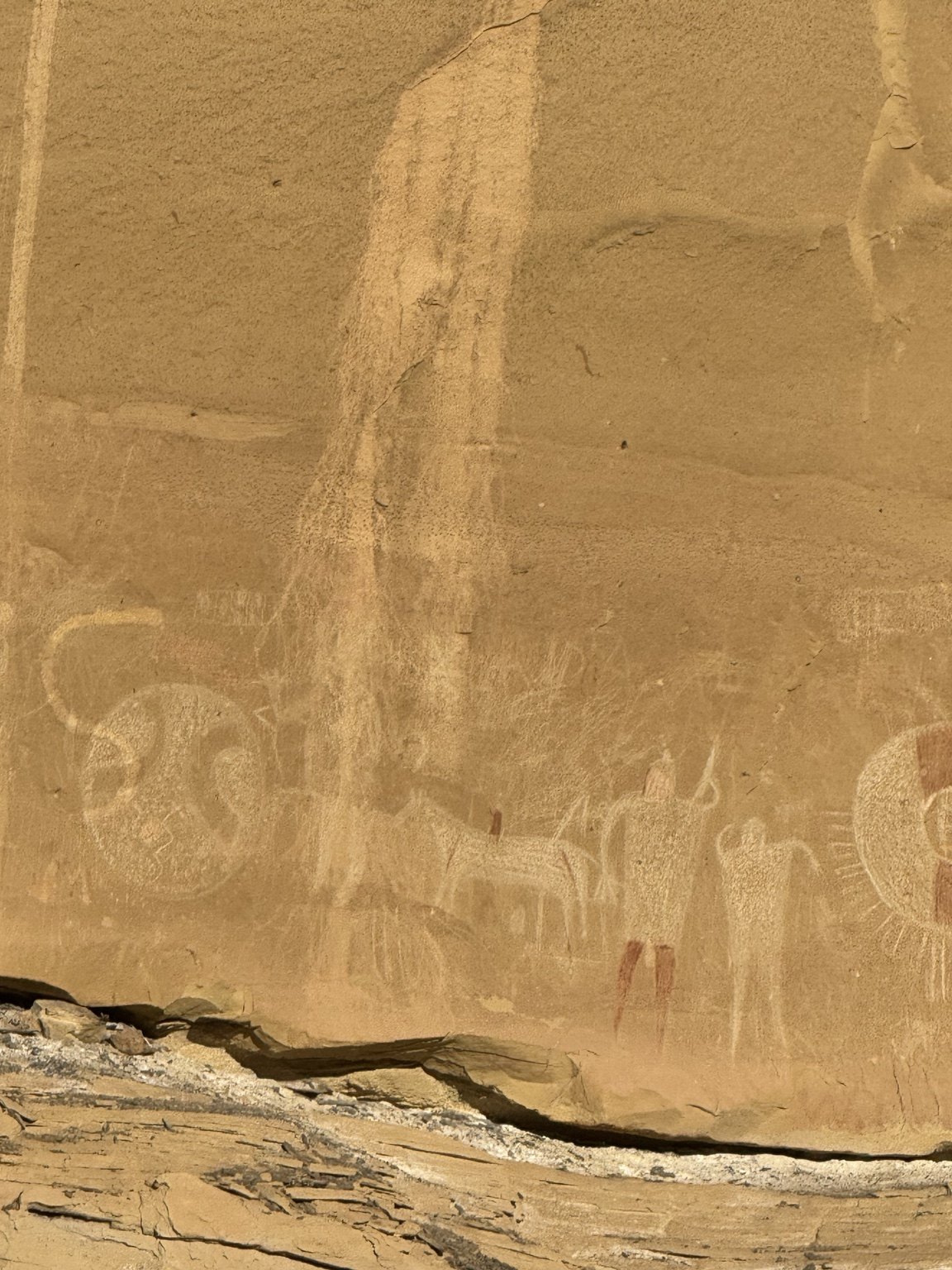
The most visually arresting images are the elongated anthropomorphic figures. Several exhibit tapered or rectangular bodies, minimal or absent limbs, unusual head forms, and pronounced differences in scale. Some appear almost suspended against the stone rather than grounded in an ordinary scene.
Those qualities matter because they are observable. They do not, by themselves, tell us what the figures were intended to represent. Rock art can encode ritual, ancestry, myth, identity, altered-state experience, narrative, or meanings that are no longer recoverable.
03 // The Question NHA Brings to the Site
The biblical giant traditions do not give us an iconographic key for identifying a Nephilim in rock art. Genesis 6:1–4 names the Nephilim in connection with the “sons of God” episode. Numbers 13:33 associates the Nephilim with the Anakim in the spies' report. Deuteronomy 2–3 and Joshua 11–15 preserve additional memories of unusually formidable peoples associated with the Rephaim and Anakim.
Second Temple literature—most notably 1 Enoch 6–16 and related traditions—expands the Genesis 6 story into a much more developed Watcher narrative. That literature is useful for understanding how ancient Jewish readers interpreted the biblical episode. It is not evidence that a Utah rock-art panel depicts Watchers.
04 // Details Matter
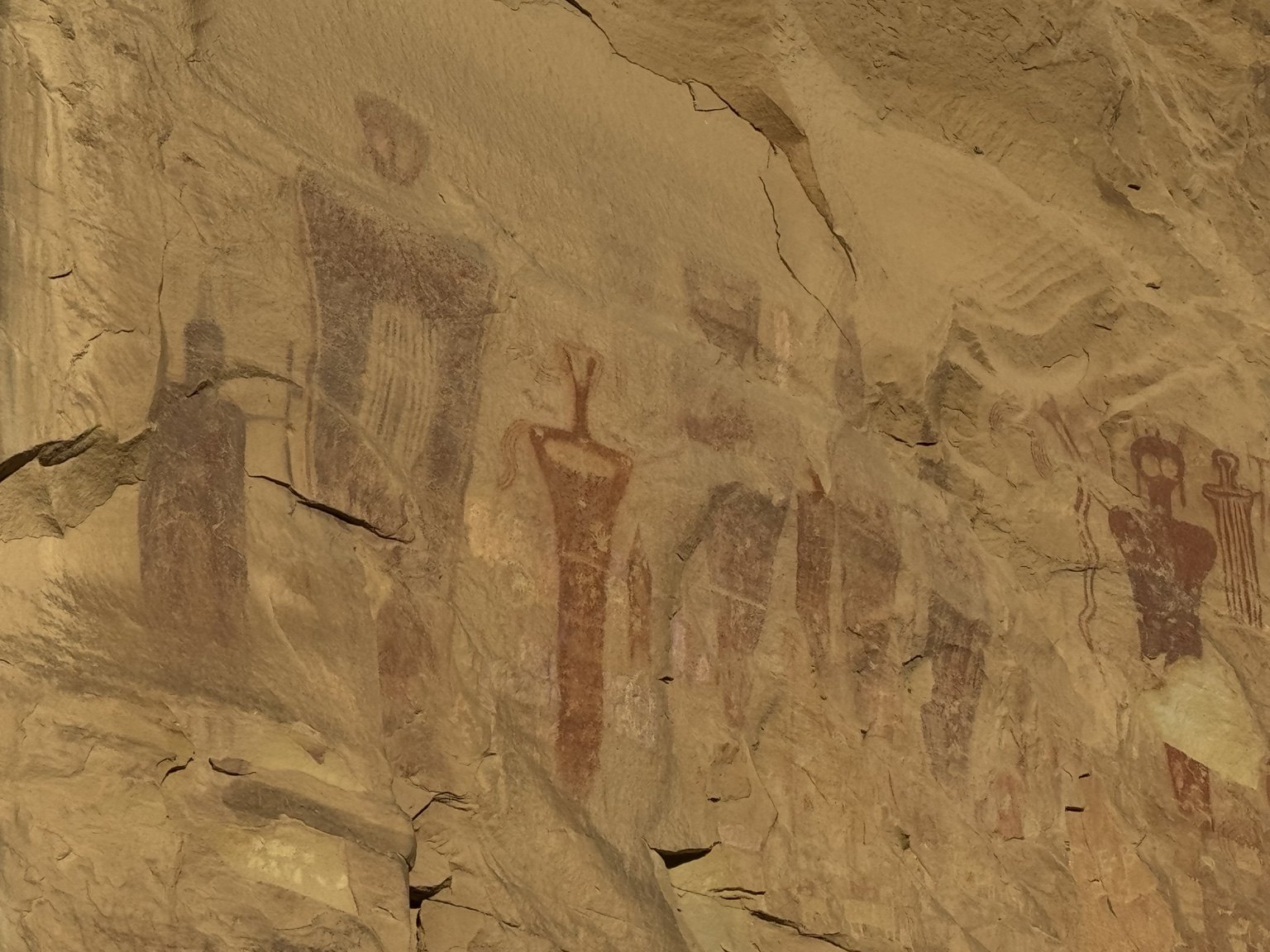
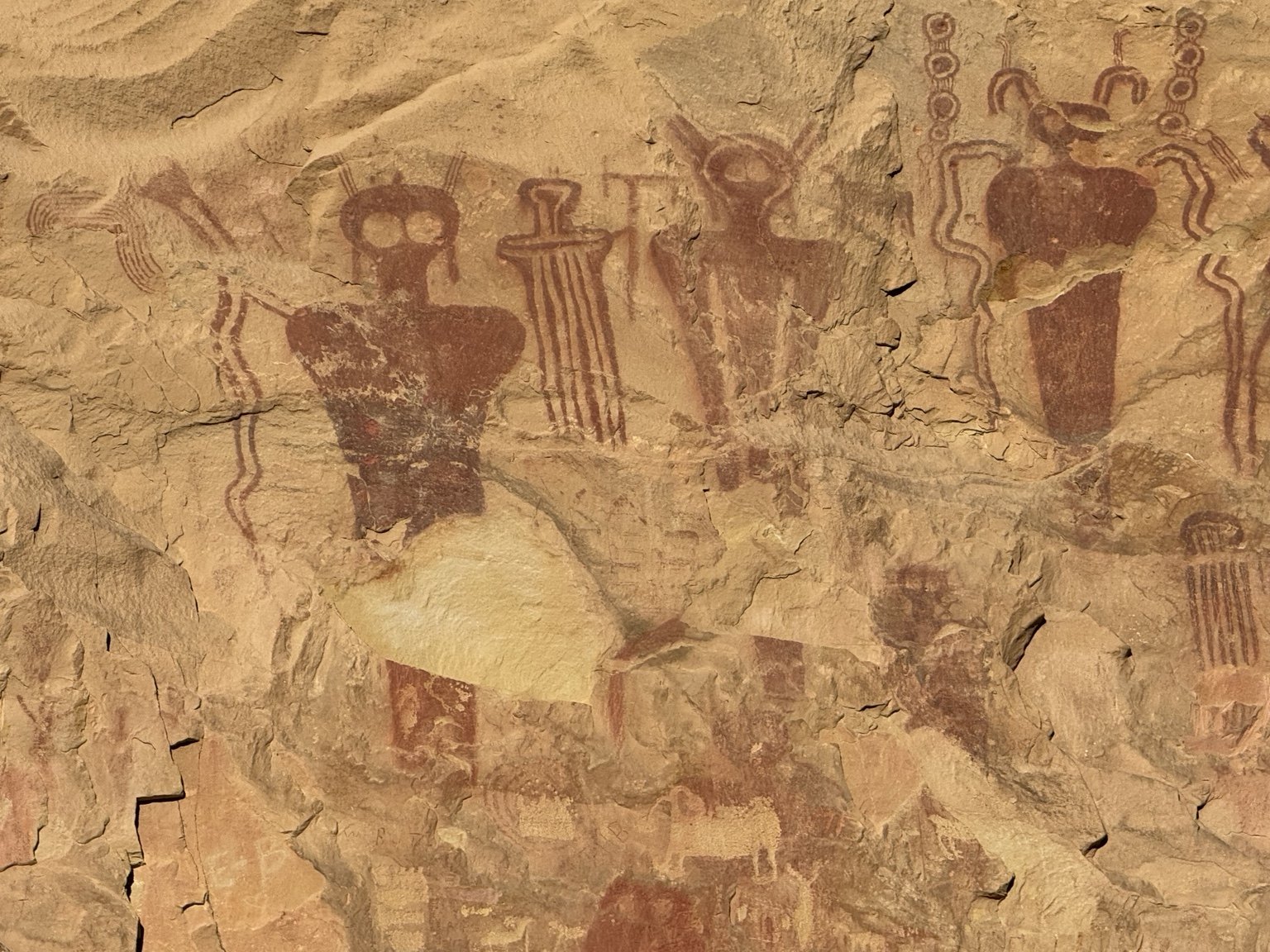
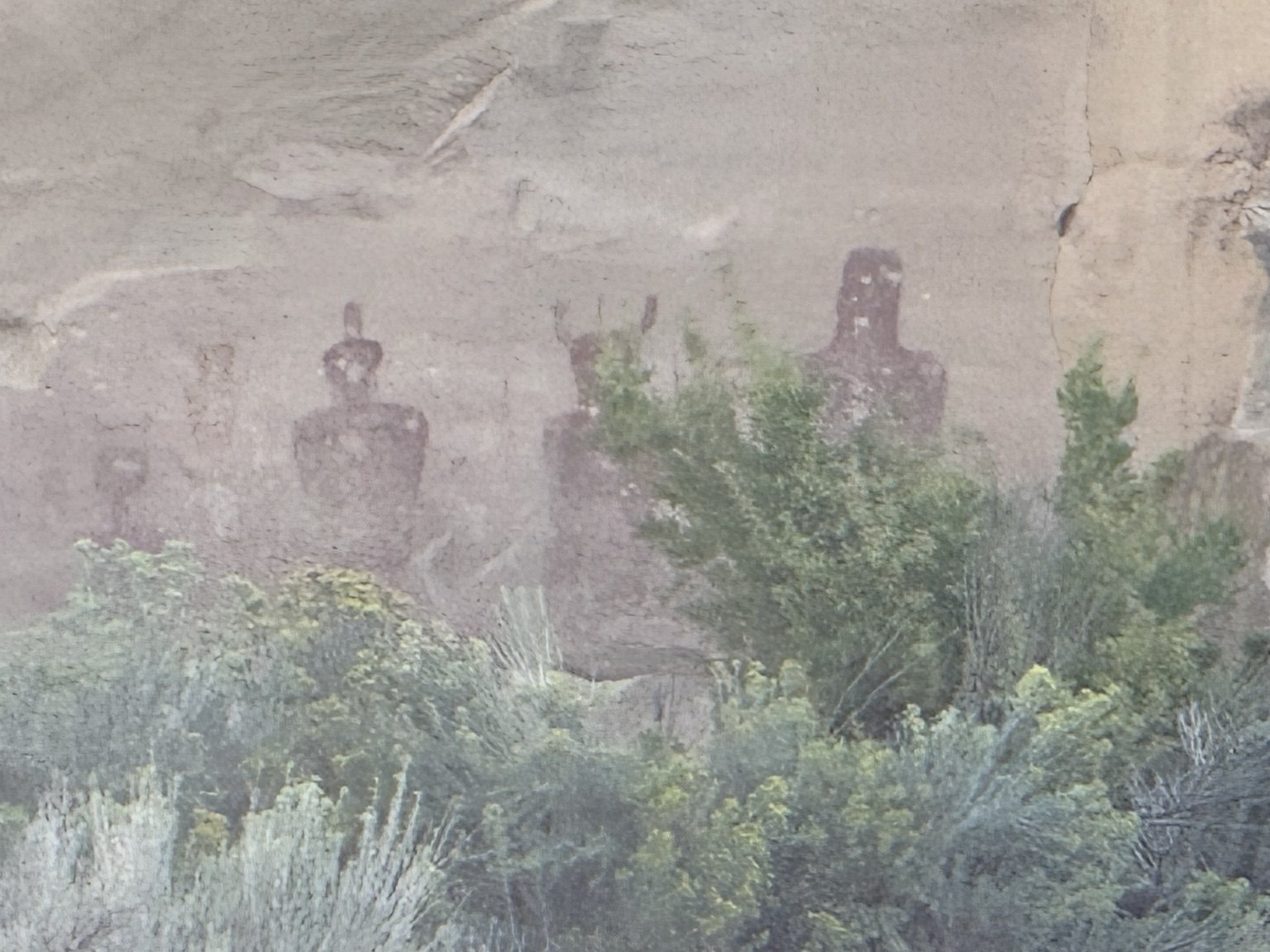
At close range, the panel resists the flattened images that circulate online. Pigment density changes across the figures. Weathering and flaking interrupt outlines. Some details that look like faces from a distance become ambiguous at close range, while other features become more pronounced. The surrounding figures also matter: the panel is not composed only of the most dramatic humanoids.
05 // NHA Assessment
Sego Canyon deserves continued study because the imagery is genuinely unusual and because several cultural traditions are preserved in close proximity. The elongated anthropomorphic figures are particularly striking. Their appearance justifies careful comparison with other ancient supernatural and giant traditions.
But the evidence presently available does not justify identifying these figures as Nephilim, Watchers, or any other biblical entity. There is no established archaeological bridge connecting the creators of the Sego Canyon images to the peoples or literature of the ancient Near East.
NHA Disposition // Field Report 001
Describe first. Compare second. Interpret last.
Reference Desk
Site context: Bureau of Land Management, “Sego Canyon Rock Art Interpretive Site.” The BLM identifies three culturally distinct rock-art styles at Sego Canyon: Fremont, Ute, and Barrier-style.
BLM Sego Canyon Rock Art Interpretive Site →
Comparative texts: Genesis 6:1–4; Numbers 13:33; Deuteronomy 2–3; Joshua 11:21–22; Joshua 15:13–14; 1 Enoch 6–16. These texts are referenced for comparative theological study, not as archaeological identification of the Sego Canyon imagery.
Photography: NHA field documentation, Sego Canyon, Utah, 06 Sep 2026.